
There Are No Rules Yet ... Only Technology
Week 001: AI stopped imitating and started directing.


A weekly look at where creativity is headed.
Sora 2 and the Collapse of Authorship

OpenAI’s Sora 2 didn’t just update a model, it updated the idea of what it means to direct.
The new release brings sound generation, self insertion, and continuity that borders on self awareness.
Every frame feels composed with intention, as if the machine finally understands timing and tone.
Hollywood, of course, panicked. CAA warned that Sora 2 could be “harmful to intellectual property.”
It’s a fair concern, but it misses the deeper story.
This isn’t a fight about technology; it’s a fight about authorship.
When creativity becomes code, the hierarchy of storytelling shifts.
We see this as the beginning of a new authorship class > one where direction, emotion, and motion are composable.
Our work with these various models are rooted in that same question: how do you encode taste?
How do you make a system that feels like it’s thinking in shots, not pixels?
The future of film won’t be about who holds the camera.
It’ll be about who writes the behavior of the camera itself.
Read: CAA calls Sora 2 harmful — Variety
Pika’s Predictive Video and the Future of Continuity

Pika Labs released an update introducing predictive video the ability for a model to anticipate what happens next in a scene.
That might sound small. It’s not.
For years, AI video tools have generated in stills and bursts - beautiful, but disconnected.
Predictive video adds a missing human quality: continuity.
The model begins to “think in sequences,” understanding momentum, cause, and consequence.
That’s the same problem we’re obsessed with.
When you work in narrative, continuity isn’t a luxury AND it’s the emotional spine.
Without rhythm, there’s no tension. Without memory, there’s no story.
How do you train systems to recognize emotional continuity ? How should a shot feel after the one that came before it?
It’s not just scene building. It’s story building.
This shift turns AI from a generator into a storyteller - one capable of carrying a thread across moments.
Read: Dr. Cintas on Emerging Video Intelligence →
Agents and the Death of Apps
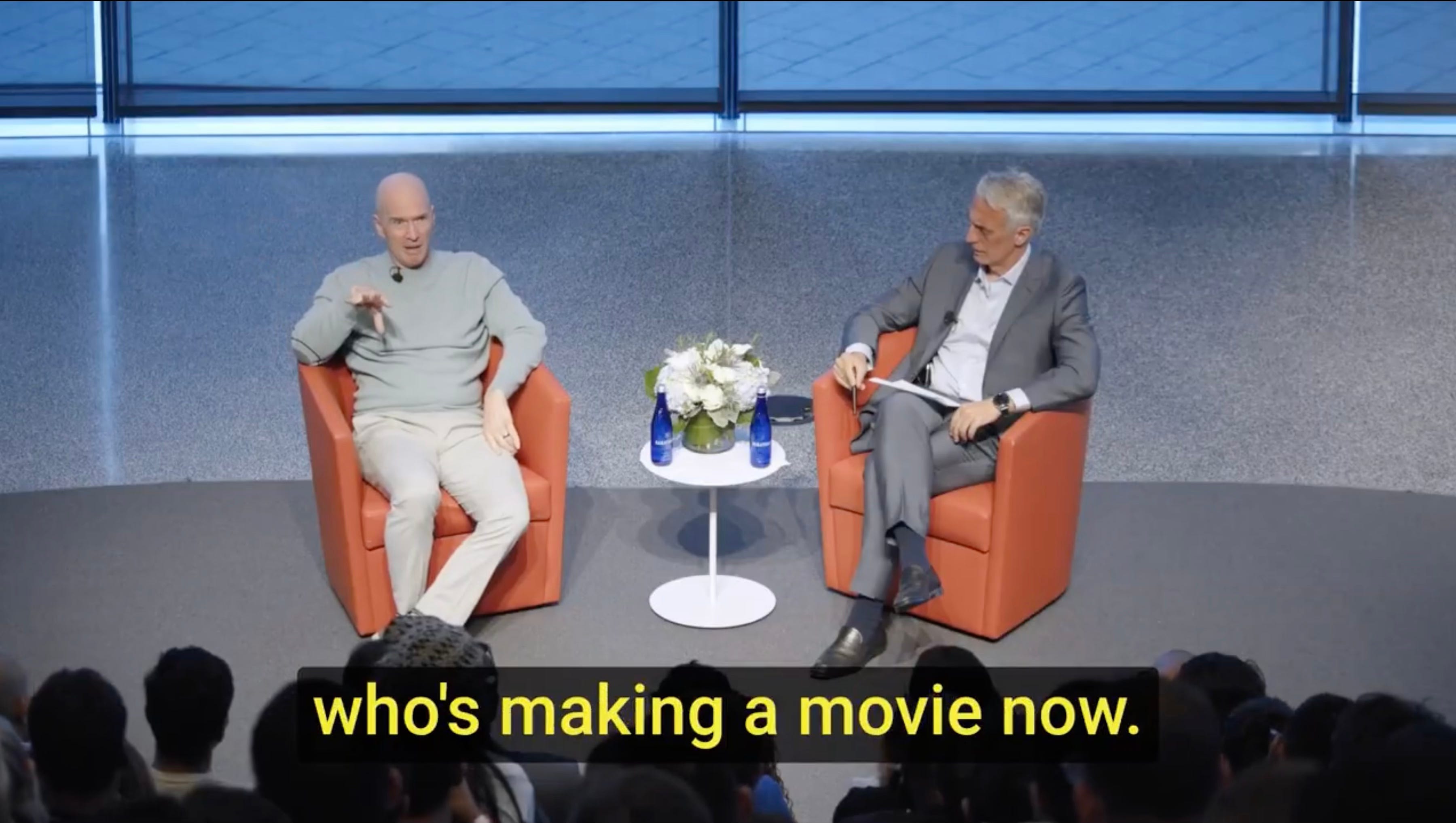
a16z’s recent post argues that the next generation of tools won’t be apps; they’ll be agents.
It’s a subtle statement, but a big one.
Apps execute commands. Agents interpret taste.
That small distinction changes everything about creative work.
Right now, most AI tools still rely on the user to know exactly what they want every prompt, every adjustment, every setting.
Agents will flip that dynamic.
You’ll brief them once, and they’ll adapt.
The creative process becomes a conversation not a command line.
At ALIVE, this is core to how we’re building: systems that remember aesthetic preference, emotional pacing, and even rhythm.
Think of it as memory for mood.
The future cinematographer isn’t a person - it’s a network of aesthetic agents that collaborate to maintain your vision.
Read: a16z on the Creator-Tool Economy →
Jake Paul vs. Sora: The Creator Becomes the Medium
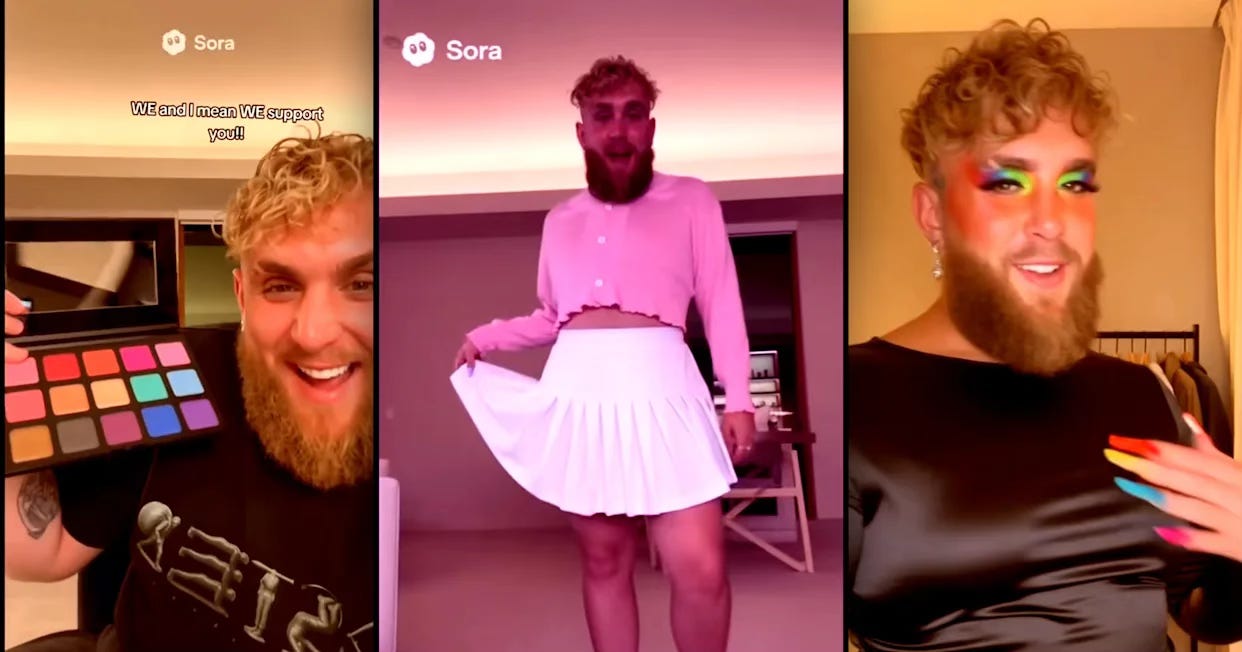
Jake Paul tweeted:
“One day I’ll make a movie using AI and I’ll play every role.”
It’s easy to laugh at, but he’s actually predicting a real future.
The next generation of creators won’t just control the narrative, they’ll be the narrative.
We’re entering the Simulation Era: where identity itself becomes a medium.
Influencers were already designing personas; now they’ll design entire worlds.
Jake’s tweet might sound like a flex, but it captures a cultural truth:
Performance is becoming programmable.
In a few years, “acting” won’t mean pretending, it’ll mean training a model of yourself to perform on your behalf.
The celebrity doesn’t disappear; it scales.
Min Choi: “The AI Aesthetic Is Dead.”
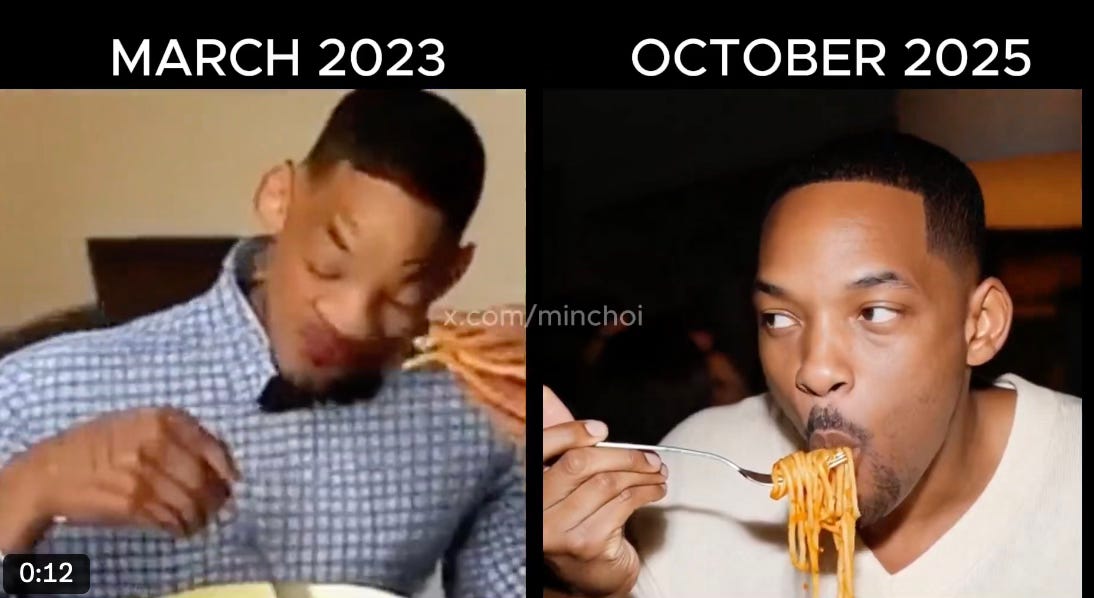
Min Choi summed up what a lot of us have been feeling:
“AI is no longer an aesthetic — it’s just the medium.”
The chrome bodies, glowing eyes, and vaporwave palettes that defined early “AI art” now feel like a relic of 2023.
AI imagery is moving from spectacle to language; invisible, integrated, and everywhere.
That means the battleground has shifted.
The question is no longer can you use AI?
It’s what do you use it to say?
At ALIVE, that’s our whole thesis: the aesthetic is maturing into narrative intelligence.
The goal isn’t to make AI look human.
It’s to make it communicate like one.
Variety: CAA Joins the Copyright Crusade

Variety’s coverage of CAA’s letter shows how early we are in the policy cycle.
The legal world is scrambling to answer creative questions with economic frameworks.
But copyright has always lagged behind creativity.
You can’t legislate authorship, you can only document it.
The real innovation won’t come from law; it’ll come from provenance - tracking who directed what behavior, and when.
Ownership in the generative era won’t be about pressing “enter.”
It’ll be about designing intention.
Diesol: “AI Won’t Replace Designers Who Think in Systems.”
Diesol wrote:
“AI won’t replace designers. Designers who use AI like code will replace designers who use it like Canva.”
Exactly. We’re watching the same divide unfold in film and design between those who use AI as a shortcut and those who treat it as an infrastructure layer.
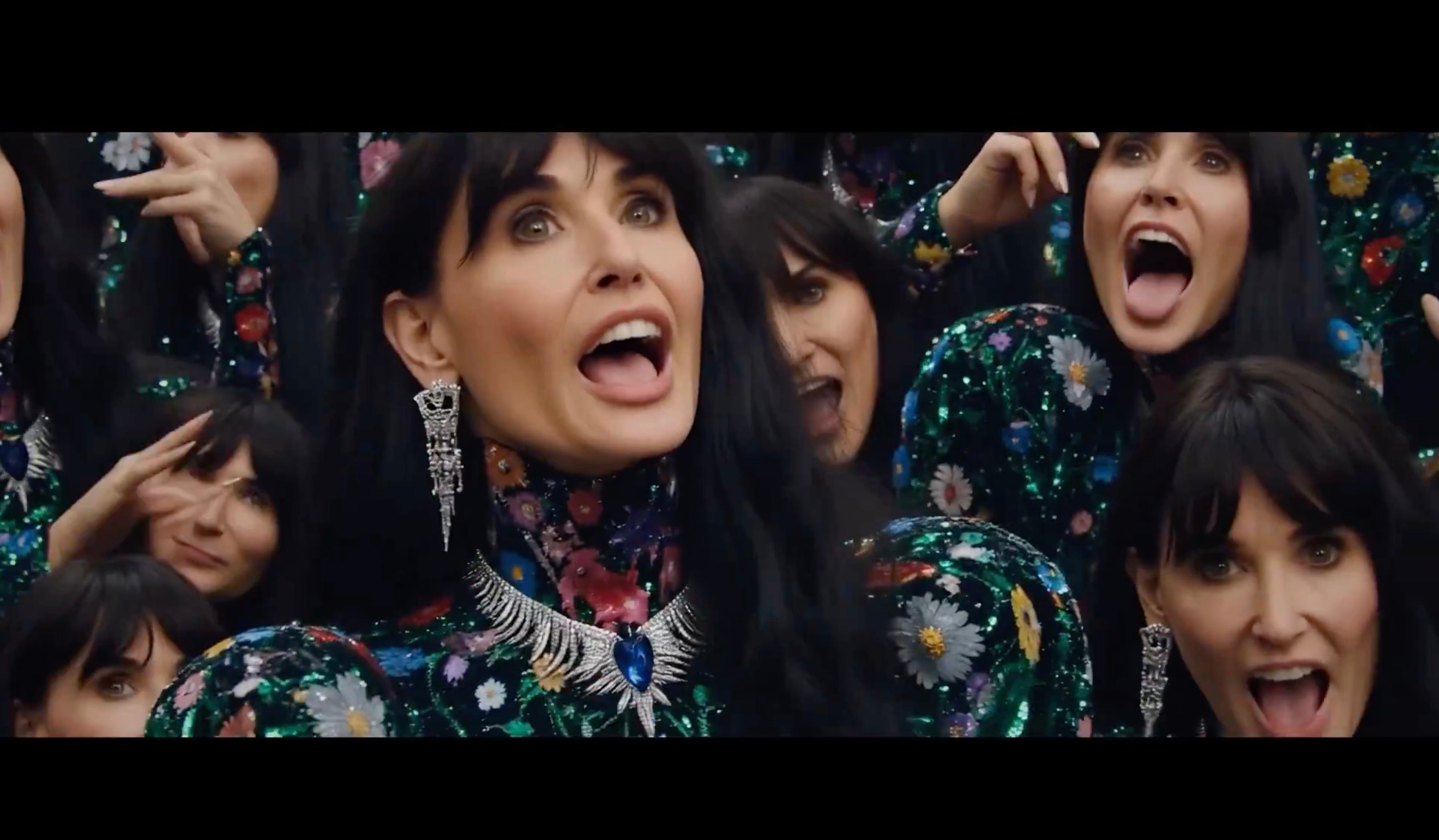
Look at Spike Jonze’s recent Gucci film, Who is Sabato De Sarno?. He used AI not to generate scenes but to prototype emotion leveraging generative systems for lighting reference, camera movement, and pacing before ever stepping on set. The AI was a collaborator, not a gimmick.
That’s the distinction Diesol is pointing toward. The future belongs to system thinkers; creatives who use AI to design process, not decoration.
We think about this the same way. We’re building tools that let directors and designers construct frameworks of intention; where rhythm, tone, and camera behavior can be authored once and reused infinitely.
Spike’s experiment shows the pattern: when artists understand AI as architecture, not aesthetic, the work becomes more human, not less.
Closing Frame
Technology keeps asking the same question:
How human do you want your tools to be?
Our answer:
As human as necessary. As mechanical as possible.
That’s how you scale taste without losing soul.
Follow the build
Reply to this email with what you’re experimenting with this week.
 | A guest post by
|
 | A guest post by
|