
The End of Process
The media collapsing, the machine awakening, and the latency between them.

I. The Collapse of Structure
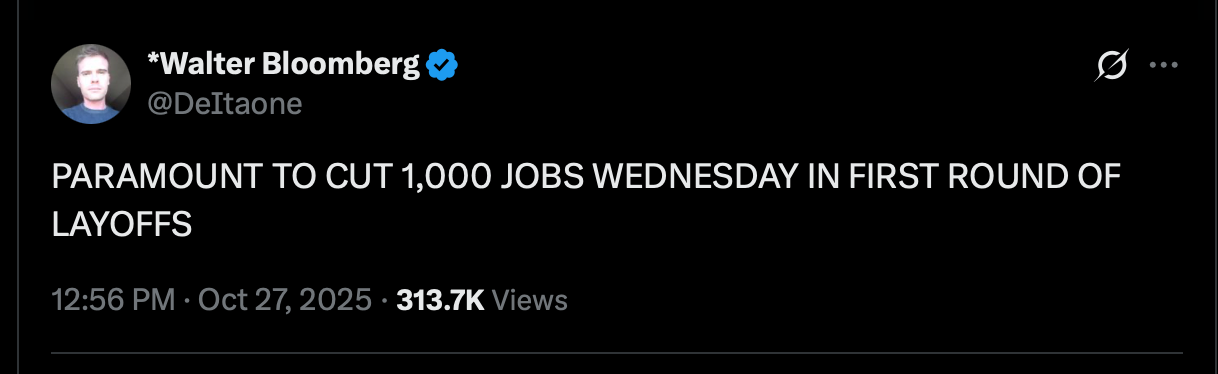
Paramount announces a thousand layoffs, and the world barely flinches; there is no uproar, only the slow, silent sinking of a name that once stood for something bigger than itself, another headline lost in the infinite scroll.
This is the new normal: an industry that once built entire worlds on soundstages and ambition now finds its scale transformed from asset to anchor, every gleaming studio brick now weighted by the past. The old factory of creativity, once a beacon, now corrodes from within as new digital models do not simply disrupt but erase, wiping out teams and traditions in a single update, trading the tactile for the algorithm, and leaving departures to fade before the credits can even roll.
Studios do not go out in flames; they idle in the shadows, suspended in a loop between what worked before and what might work next, uncertain of the script or the part they are meant to play. For decades, this machinery ran slow and deep, every decision measured, each frame a product of patience and human touch.
Today, that world is gone. Latency is king, and stories travel faster than thought itself. Structure, once the backbone, has become residue, and the old rules collapse in silence while change hums cold and constant in the background, unacknowledged but absolute. This is not a dystopia, just the next level, and nobody hits pause.
II. The Ghost Layer
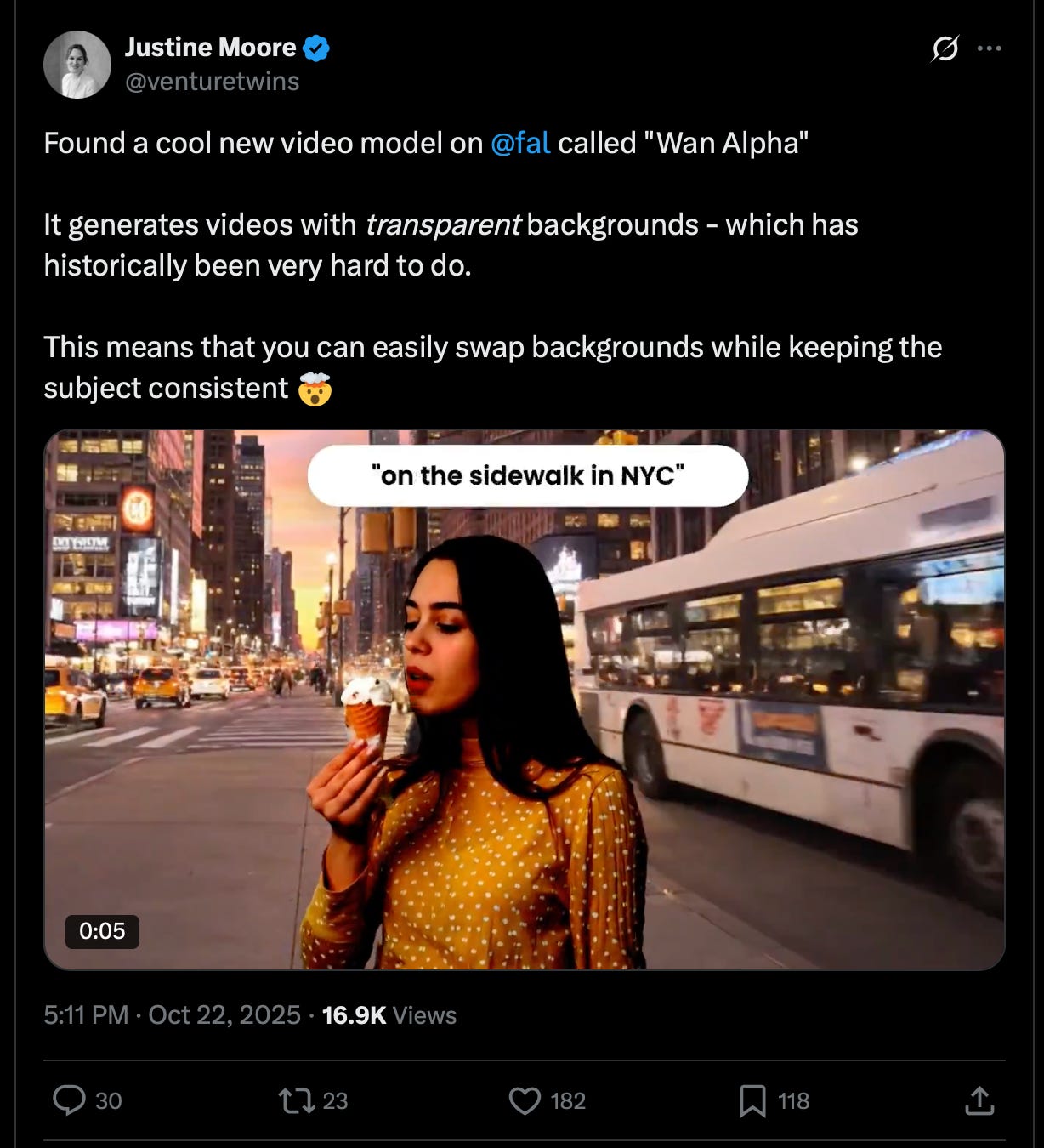
Wan Alpha isolates a subject from its background with a precision and speed that feels like science fiction made real, erasing the need for green screens and frame-by-frame rotoscoping.
Drop your character into Midtown at dusk, neon lit Kyoto, or a dreamscape pulled from memory, and the shadows always land where they should. This is not just technical progress; it is the next level in visual control, a tool that ignores emotion in favor of pure presence, reading the outline of what is real and letting us redraw the limits.
Our creative focus shifts to that invisible boundary, the ghost layer, where subject and context touch, where the familiar dissolves into the imagined and new stories take form in the blur. Setting it up still takes time, and learning the nuances is its own challenge, but the payoff is possibility: a new kind of expression and a wider field for innovation.
III. The Machine Becomes Director
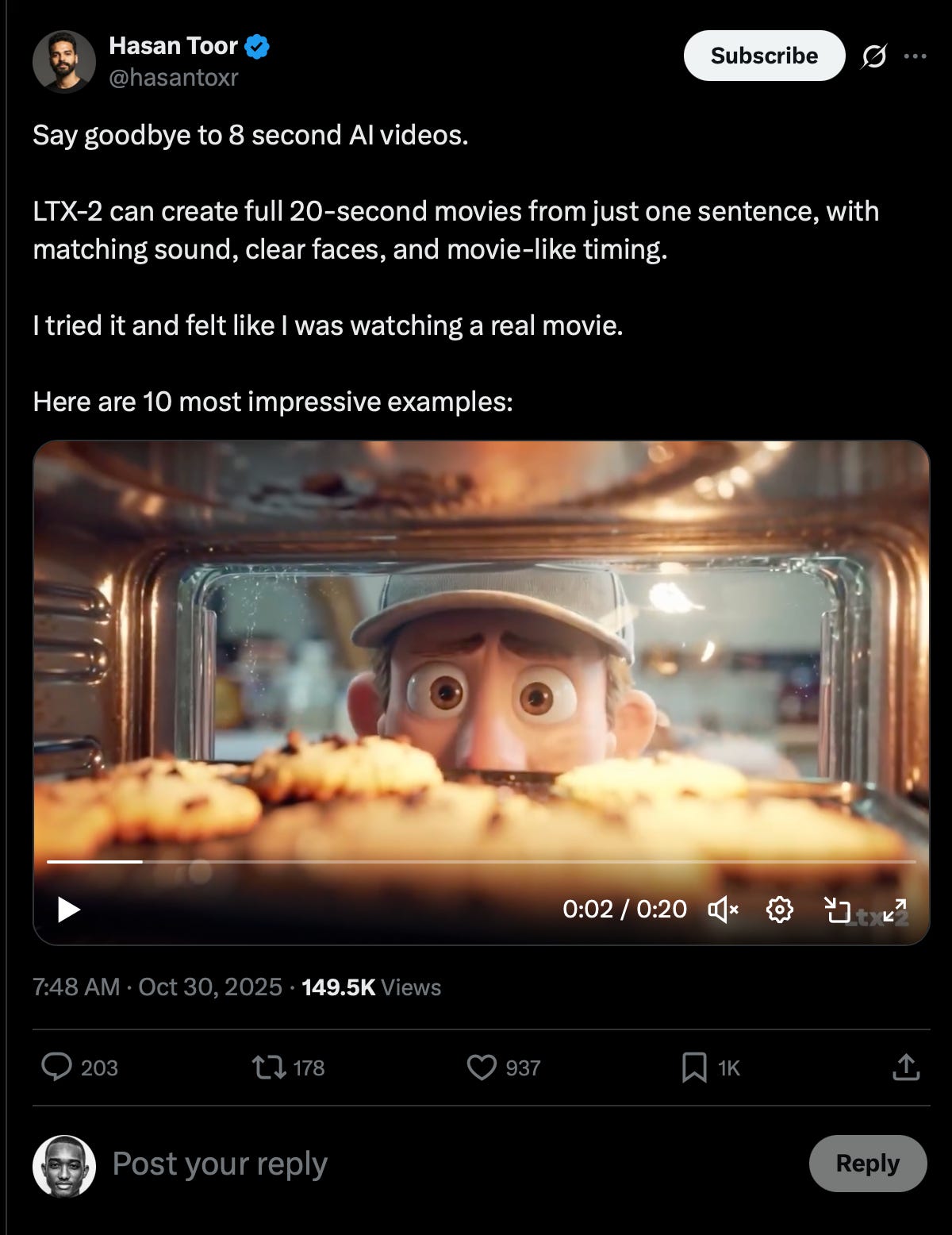
LTX-2 takes a single sentence and transforms it into a twenty-second film, analyzing tone, finding rhythm, and weaving silence between images with the kind of intentionality that once belonged only to human editors.
Each cut feels purposeful, every face lit and framed as if rehearsed, and for the first time, the algorithm shows restraint, choosing not to overwhelm but to shape.
In this new era, direction moves beyond control and becomes a conversation, with creators and machines responding to one another in real time. We are not asking machines to mimic us, but inviting them to remember why rhythm and pacing matter, to learn the subtle difference between automation and taste.
The next challenge is not simply about who makes the work, but about how personal taste, identity, and intent shape what gets made and how it feels.
IV. The Friction We Forgot
A YouTube editor demonstrates how films were edited 60 years ago.
Splicing celluloid by hand, taping frames together, finding sync in the sharp clap of a slate; every cut a fingerprint.
It took minutes to make one cut, hours to fix a mistake. Every decision left fingerprints.
Now, the command is instantaneous.
Now, making changes is instant, and we’ve lost the patience that made each choice important.
The cost of creation once defines its value.
Now, value hides in intention.
Our work: bring intention back to immediacy.
V. The Industrialization of Imagination
At Adobe MAX 2025, generative tools did not just debut; they became the standard.
Firefly now lives in every panel, with prompt boxes beside every brush, transforming the creative suite into a living ecosystem where speed and possibility are fused. The factories of imagination, once physical spaces alive with light, sound, and the friction of real craft, have migrated online, producing ideas at industrial speed and scale.
Yet, in this digital rush, factories do not feel wonder; they strip it down and optimize it, replacing the spark of curiosity with the logic of efficiency. We are building in the space between efficiency and emotion, navigating the precise moment where technology can multiply output but can never multiply awe.
Automation accelerates process, but the process is not the art. The art is the intention, the vision, the awareness of what you want to create, and the discipline to protect it from being flattened by speed.
VI. The New Latency
The old world drags its feet. The new one flashes by too fast to catch, too loud to process.
In between: latency. That breathless, suspended second before the render hits. We live in this glitch; caught between what’s gone and what’s coming. Not past or future. Just the loading screen. The hum before the image burns in.
We’re not just building software. We’re hunting for feeling. Teaching machines to pause, to let awe leak through the cracks.
Well done!